30 years · professional boiler manufacturer & system integrator

Choose the heating medium first

Thermal Oil Heater vs Steam Boiler

Compare process physics, pressure, water and heat recovery

The correct choice begins with how the process must receive heat. Thermal oil normally circulates as a liquid without phase change; steam is generated and then condenses as it transfers heat.

The fundamental distinctionNo phase change gives thermal oil its high-temperature, lower-pressure advantage. Steam’s phase change gives it strong heat-transfer behavior and direct-use flexibility.
Industrial boilers manufactured for steam and thermal fluid process heatingSelect the heat-transfer method before selecting the equipment series

Side-by-side engineering basis

The practical differences that change plant design

Neither medium is universally better. The preferred system is the one that matches temperature, process contact, pressure tolerance, utilities, maintenance capability and energy-recovery plan.

Decision factorThermal oil heaterSteam boiler
Heat-transfer mechanismCirculating organic liquid, normally without phase changeWater boils to steam; steam condenses at the user
Temperature and pressureHigh-temperature indirect heat at comparatively low loop pressureSaturation temperature rises with steam pressure
Best process fitDrying, hot pressing, laminating, reactors, jackets, exchangers, asphalt and tank heatingDirect injection, sterilization, humidification, cooking, washing, tracing and steam-side jackets
Water treatmentNo boiler-water softening, demineralization or deaerationFeedwater quality, deaeration, blowdown and chemical control are essential
Condensate systemNo steam condensate is producedHot condensate should be recovered where practical to retain water and sensible heat
Fluid managementMonitor viscosity, oxidation, moisture, contamination and film-temperature exposureMonitor feedwater, boiler water, steam purity, blowdown and condensate quality
Freeze and leak considerationsFluid selection, expansion, venting, fire risk and leak containment matterFreezing, water hammer, corrosion, steam traps and condensate return matter
Typical control basisOutlet temperature, circulation flow, differential pressure, tank level and burner/fuel interlocksSteam pressure, drum level, combustion, feedwater, low-water protection and steam demand

Decision shortcuts

Start from what the process actually needs

Choose thermal oil when

The process needs stable indirect heat at elevated temperature

  • Steam does not need to contact the product
  • High process temperature is needed without corresponding steam pressure
  • A closed liquid loop suits the users and plant layout
  • The operator can manage thermal-fluid condition and expansion safely
Review thermal oil heater systems
Choose steam when

The process consumes steam or benefits from condensation

  • Direct injection, sterilization or humidification is required
  • Steam tracing or existing distribution already serves the plant
  • Rapid heat transfer from condensation fits the user
  • Water treatment and condensate recovery can be operated correctly
Review industrial steam boilers

The condensate issue

Unrecovered condensate carries valuable sensible heat

Steam’s latent heat is released at the process, but the resulting hot saturated water still contains significant sensible heat. If condensate is discharged instead of returned, fuel, makeup water and treatment value are lost.

The exact loss changes with steam pressure and condensate-return conditions. Use the live analysis on the steam-boiler page rather than applying one universal percentage.

Open condensate loss analysis
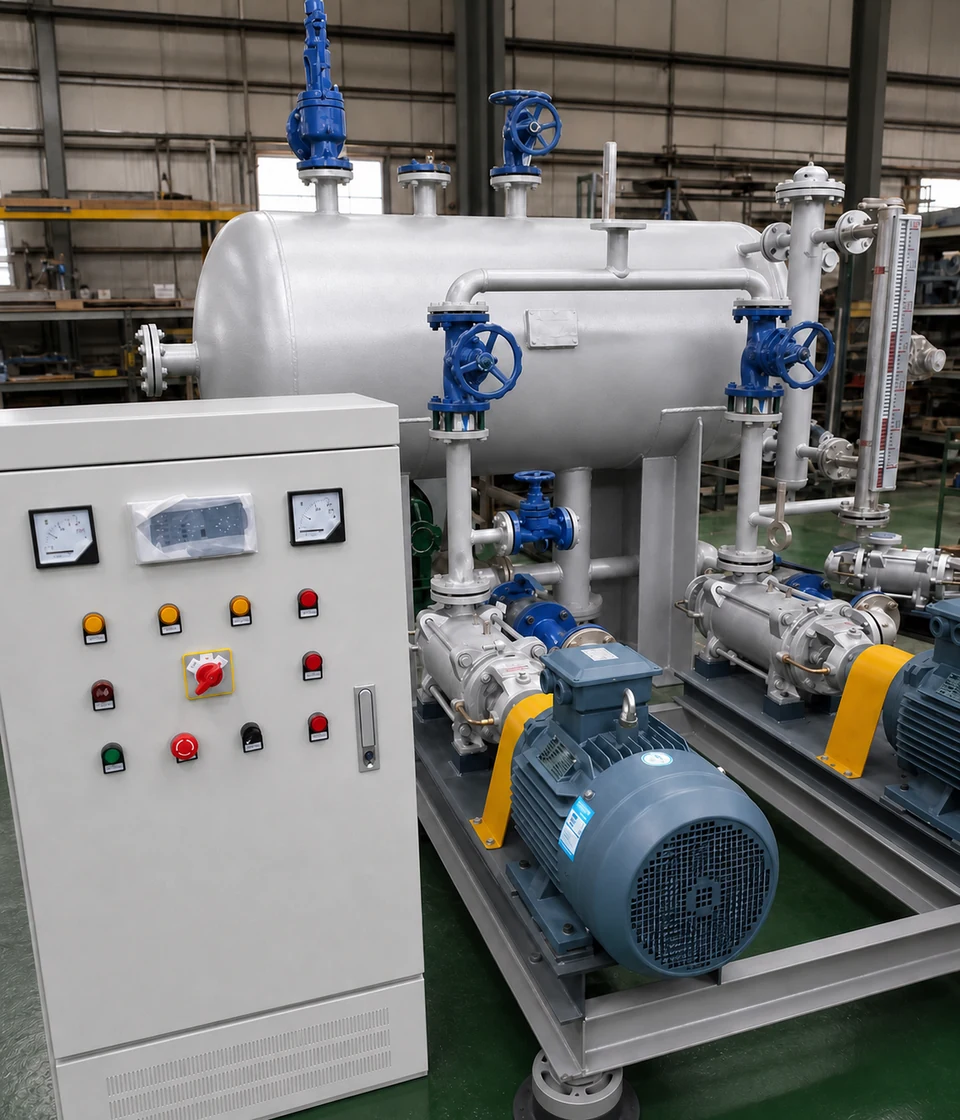
Industrial steam condensate recovery system with receiver tank, pumps and control cabinet

Engineering FAQ

Questions to resolve before requesting quotations

Can thermal oil replace steam in every process?

No. Thermal oil is an indirect heating medium. It cannot replace duties that require steam contact, sterilization, humidification or a process specifically designed around condensation.

Is thermal oil always more efficient?

No. Efficiency depends on combustion, heat recovery, distribution losses, load profile and operating practice. Thermal oil avoids condensate losses but introduces pump power and fluid-management requirements.

Why is thermal oil used for asphalt and reactor heating?

These applications often require stable, controllable indirect heat over a wide temperature range without exposing the product to steam or water.

What should an RFQ include?

Include process duty, supply and return temperature or steam pressure, flow or steam-demand profile, fuel, emissions, operating hours, utilities, control preference, supply scope and project country.

Heating-medium review

Send the process conditions before choosing a boiler name.

We can compare thermal oil and steam on the same duty, temperature, fuel and operating basis.

Request medium comparison